What Anzac Day Actually Feels Like as a Visitor (And Why It Changed How I Travel Forever)
Updated: Apr 23
Anzac Day travel in New Zealand and Australia is unlike anything I have ever been able to fully describe to a client in a single conversation. I can tell you the dates, the locations, the traditions, and the history. But what I cannot quite put into words, until now, is what it actually feels like standing in the dark before dawn, surrounded by strangers who are not really strangers at all. You all wait together in silence for the light to come.
I want to try to tell you that story today, because I think it might change the way you travel, the way I believe it has changed me.
My grandfather fought in the Second World War as a 2nd Lieutenant in the New Zealand Army, with the 21st and 24th Infantry Battalion. He earned the Distinguished Conduct Medal. This is the second highest honor a New Zealand soldier can receive, just below the Victoria Cross. He was a man of quiet strength and deep dignity.

He never talked about the war. He never watched anything war related. And every Anzac Day, he stayed home. Some things do not need words. They just need to be remembered.
He died when I was 17 from leukemia, I saw the physical scars when I was young. I did not fully understand them then. I do now.
Each Anzac Day, my family is there, remembering him and all who have sacrificed. It is never a question of what we do on this day each year.
I share this with you because, as someone who now spends her life helping people travel through Australia and New Zealand, I genuinely believe that experiencing Anzac Day here as a visitor is one of the most profound things travel can offer. And I want you to feel it too.
What Anzac Day Actually Feels Like as a Visitor (And Why It Changed How I Travel Forever)
What Is Anzac Day and Why Does It Matter to Travelers?
Every year on April 25, Australia and New Zealand pause. Not in a performative way. Not in a way that feels distant or disconnected from everyday life. But in a way that is woven into the very fabric of who these two nations are. This is the answer to what Anzac Day is. And it is one that goes much deeper than any history book can fully capture.
Anzac Day marks the anniversary of the 1915 Gallipoli campaign. It is when the Australian and New Zealand Army Corps, known as the ANZACs, landed on the shores of the Gallipoli Peninsula in Turkey during World War I. The campaign lasted eight brutal months. It resulted in over 140,000 fatalities across all sides. And by military measure, it was a failure.
Yet out of that failure grew something that shaped two national identities forever: The Anzac spirit, a belief in courage, mate ship, resilience, and sacrifice that both nations still carry today.
For travelers, understanding this is not just background information. It is the key to understanding why standing at a war memorial at 5:30 in the morning alongside thousands of New Zealanders and Australians feels like one of the most quietly powerful things you will ever do on a trip.
This is not a tourist attraction. It is a living, breathing national act of love and remembrance. And you are welcome to be part of it.
Can Tourists Attend Anzac Day Services? Absolutely. Here Is What You Need to Know.
This is one of the most common questions I receive from clients planning their Anzac Day travel. The answer is a warm and resounding yes. Anzac Day services across both New Zealand and Australia are open to the public. There are no tickets, no barriers, no entry requirements. You simply show up.
What makes attending Anzac Day as a tourist so moving is not just the ceremony itself. It is the way you are received. The Anzac Day visitor experience is unlike any cultural event I have attended anywhere in the world.
Strangers nod to you in the pre-dawn dark. Someone offers you a poppy. An elderly man in a returned serviceman's coat catches your eye and gives you a small, solemn nod, as if to say: I am glad you are here.
You do not need to be Australian or a New Zealander. You do not need a personal connection to the conflict. You do not need to know the words to the national anthem. What you need is a willingness to show up, to stand still, and to let the weight of the moment find you.
Attending Anzac Day as a foreigner, I have found, often creates some of the deepest connections of an entire trip. You are not observing from the outside. You are welcomed into something real.
One of my clients, a woman from Texas who was traveling solo through New Zealand for the first time, happened to be in Wellington on April 25. She had not planned to attend the dawn service. She simply woke early, saw people walking quietly in the dark, and followed. She stood at Pukeahu National War Memorial Park as the Last Post was played, surrounded by people she had never met. She said afterward that she cried in a way she had not cried in years. She told me it was the most unexpectedly important morning of her entire trip.
Anzac Day Travel in New Zealand vs. Australia: Where Should You Go?
Both countries offer deeply moving Anzac Day experiences, but they have their own distinct character. Choosing between Anzac Day New Zealand and Anzac Day Australia often comes down to your travel style and what you are hoping to feel.
Experiencing Anzac Day in New Zealand
In New Zealand, Anzac Day has an intimacy that can catch you completely off guard. Even in the larger cities, there is a quietness to it. A sense of collective breath held.
In Auckland, the dawn service is held at the Auckland War Memorial Museum in Parnell. It is one of the most beautiful settings in the country. A parade begins at 5:45 a.m. and a service at the Court of Honour at 6 a.m.
In Wellington, thousands gather at Pukeahu National War Memorial Park for the National Service, which is broadcast live on national television. Wellington also has the world-class Te Papa Museum exhibit, Gallipoli: The Scale of Our War. This exhibit was created in partnership with Weta Workshop. It brings the human stories of the campaign to life in a way that is stunning and deeply personal. It is free to attend year-round, and it is worth building an entire day around.
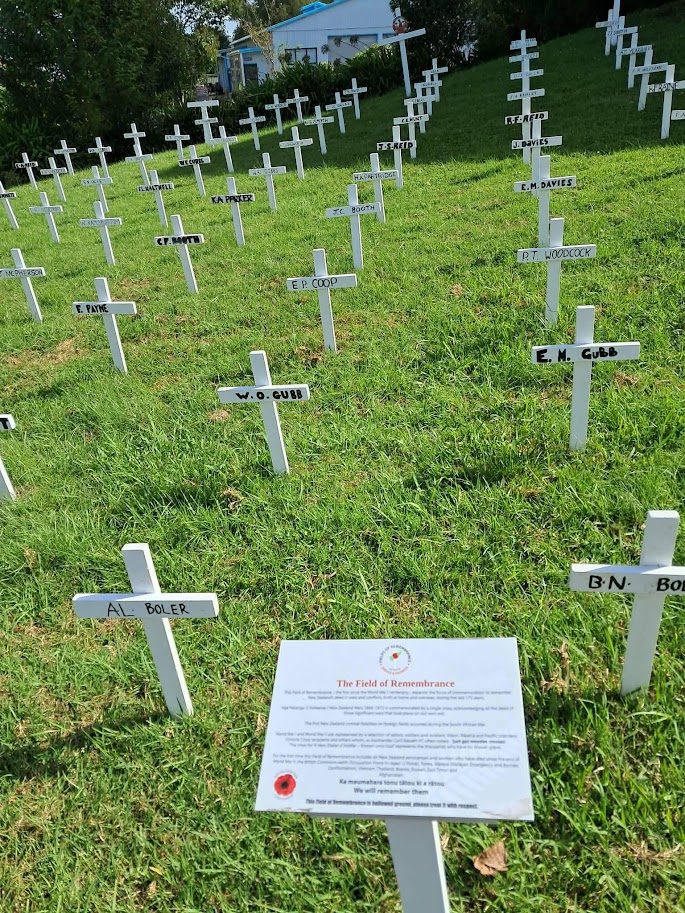
But some of my favorite Anzac Day moments have happened in small New Zealand towns, where the entire community gathers at a local RSA (Returned Services Association) in the dark, wreath in hand, knowing every face around them. There is something about the small-town service that distills the day down to its most essential truth.
Experiencing Anzac Day in Australia
In Australia, the scale is often larger, but no less moving. Sydney's Hyde Park Anzac memorial draws significant crowds and offers a beautifully maintained memorial and exhibition that tells the stories of those who served.
Melbourne's Shrine of Remembrance hosts one of the most attended services in the country. Smaller RSL (Returned Services League) clubs across Australia open their doors all day for community gathering.
One tradition unique to Australia is the game of Two-Up, a simple coin-toss gambling game that is legal only on Anzac Day. It is played in RSL clubs and hotels across the country. It sounds lighthearted, and in some ways, it is. But it is also a tradition that connects modern Australians to the soldiers who played the same game in the trenches. It is the kind of moment where history feels living, not archived.
A couple I worked with spent Anzac Day in a small coastal town in Queensland. They had not planned it. Their itinerary just happened to land them there. They wandered out in the early morning and found themselves at a local RSL service with perhaps two hundred people gathered. By mid-morning they were inside the RSL having tea with a 94-year-old veteran's daughter, who told them stories her father had never told anyone outside the family. They called me that evening and said they wanted to come back every year.
What Happens at an Anzac Day Dawn Service
If you are planning Anzac Day travel for the first time, knowing what to expect will help you arrive prepared, both practically and emotionally. The dawn service is the centerpiece of the day. Understanding what happens at an Anzac Day dawn service helps you appreciate every moment of it as it unfolds.

Dawn Service 2025 - Photo: David Whittaker
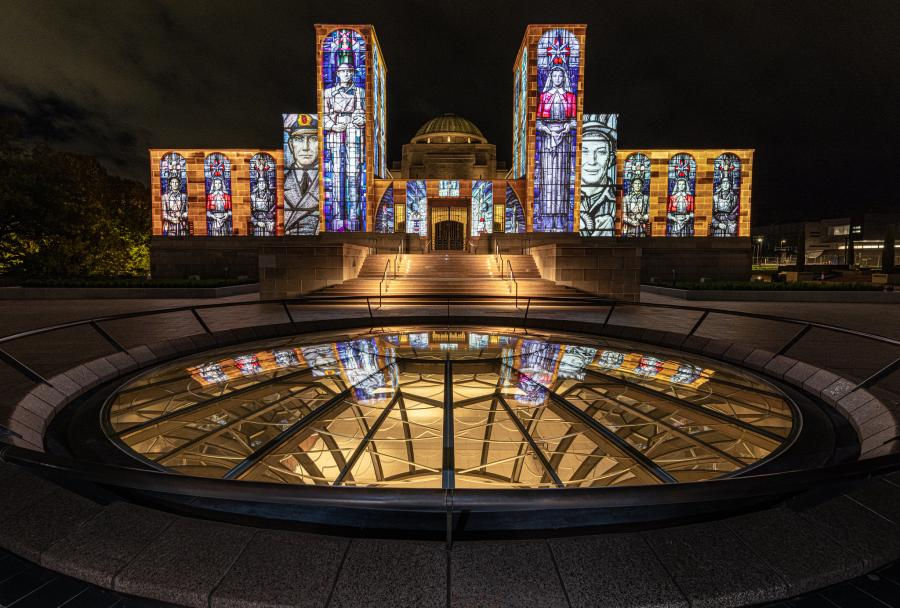
Services are typically held outdoors at local war memorials, cenotaphs, or national memorial parks. They begin in the dark, usually between 5:30 and 6:30 a.m. depending on location. They move with the quiet, deliberate pace of something that has been practiced for over a century.
The service typically includes:
a welcome and acknowledgment of the occasion
prayers or reflections
recitation of The Ode, taken from Laurence Binyon's 1914 poem For the Fallen
playing of the Last Post
a minute of silence
playing of Reveille to mark the end of the service
In New Zealand, the national anthem is often sung. In some locations a haka is performed as a powerful expression of honor and grief.
Wreaths are laid at the memorial. Sometimes children lay poppies. Sometimes veterans stand in the front rows, medals catching the first light of dawn. And then the bugle sounds, and the world holds completely still.
The Anzac Day Dawn Service Timeline: Your Hour-by-Hour Guide to Anzac Day Travel
Here is a practical guide to help you plan your morning:
Arrive at least 30 to 45 minutes before the listed service time. This is especially important at larger venues like Auckland War Memorial Museum or Pukeahu National War Memorial Park in Wellington, where crowds gather early and standing space fills up.
Dress warmly. April in New Zealand and Australia is autumn, and pre-dawn temperatures can be unexpectedly cold, particularly in Wellington and the South Island.
Find a respectful position in the crowd and settle. Services begin on time. Once underway, remain still and quiet. The recitation of The Ode is one of the most solemn moments of the service. The response, "We will remember them," is spoken aloud by the crowd in unison. You are welcome to say it too.
When the Last Post ceremony begins, you will feel the shift in the crowd before you hear it. A stillness descends. The single bugle note rises into the dawn air. This is the moment that most visitors describe as the one that stays with them longest. Many people cry. That is completely appropriate. No one will look at you.
After Reveille is played, the formal service concludes. Many people linger to lay flowers, read the names on the memorial, or simply stand quietly for a few minutes longer. In smaller towns, the crowd often moves to the local RSA hall for a cup of tea and a gathering that feels more like family than formality.

ATSIVA ceremony 2025 - Photo: Ian Roach
Anzac Day Etiquette for Visitors: How to Show Up the Right Way
Knowing how to honor Anzac Day as a visitor matters to the people around you, and getting it right is genuinely simple. Anzac Day etiquette for visitors is less about rules and more about the spirit of respect that comes naturally when you understand what the day means.
Dress modestly and warmly. There is no formal dress code. I recommend avoiding anything that feels festive or casual in a disrespectful way. Dark, neutral clothing is always appropriate.
Wear a red poppy if one is offered to you and accept it with gratitude. The poppy is a symbol of remembrance for the fallen. Rosemary, which grows wild on the Gallipoli Peninsula, is also worn on Anzac Day in New Zealand and Australia and carries its own meaning: Rosemary for remembrance.
Arrive early, as mentioned, and silence your phone before the service begins. Do not talk during the formal portions of the ceremony. Do not take video of the most solemn moments, particularly the Last Post. Photographs are generally acceptable before and after the service, and during less formal portions. However, read the room and follow the lead of those around you.
If a veteran is near you, a respectful nod or a quiet "thank you" after the service is always welcome. Do not ask to photograph their medals. Do not pepper them with questions during the service itself. Simply be present and let the day do what it was designed to do.
The Anzac Spirit Meaning: What You Feel That You Cannot Quite Explain
There is a phrase that New Zealanders and Australians use often around this time of year: The Anzac spirit. You will hear it in news coverage, in speeches at the dawn service, and in conversations at the RSA afterward. But what does it actually mean, and why does it matter to you as a visitor?
The Anzac spirit meaning is rooted in the qualities that emerged from the Gallipoli campaign. Courage in the face of impossible odds. Deep loyalty to the people beside you. A refusal to complain. Dark and gentle humor in the worst of circumstances. And an absolute commitment to not leaving anyone behind.
These qualities became the defining values of both nations. They are still recognizable in everyday New Zealand and Australian culture today.
When you stand at a dawn service, you are not just commemorating a military campaign. You are standing inside a value system that an entire culture built itself around. That is why it feels different from any other public event you have attended. That is why the silence feels heavier and the bugle sounds lonelier. You are in the presence of something that genuinely matters to the people around you.
Why Anzac Day Travel Changed How I See the World (And How It Might Change You Too)
There are trips that entertain you, and there are trips that change you. Anzac Day travel falls unmistakably into the second category. I have watched it happen to client after client, year after year.
Why Anzac Day changed how I travel comes down to a single shift in perspective: I stopped thinking about travel as a series of experiences to collect and started thinking about it as an opportunity to step, however briefly, into something larger than myself.
A dawn service does that instantly and without warning. You arrive a tourist. You leave something more.
Travel that changes you is not always comfortable. Sometimes it is standing in the cold before dawn, uncertain of the words, uncertain of your place, and then discovering that your place is simply: Here. Present. Willing. That is enough. That is, in fact, everything.
The effect of Anzac Day on the rest of a trip to New Zealand or Australia is something I have seen consistently over the years. Clients who attend a dawn service travel differently for the rest of their journey. They slow down. They ask better questions about the people they meet. They look at the landscape with a new kind of attention, knowing something about the people who shaped it and what it cost them.
How to Plan Your Anzac Day Travel in New Zealand and Australia
Planning your Anzac Day travel well in advance makes a meaningful difference, and I am here to help you do exactly that. Here is what you need to know before you go.
Practical Anzac Day Travel Tips: What to Plan Before You Arrive
April 25 is a public holiday in both New Zealand and Australia. Most shops, restaurants, and businesses are closed for at least the first half of the day. RSA and RSL clubs typically open by mid-morning and are warm, welcoming spaces. Plan your meals and transport accordingly. I can help you check local schedules before you travel if I am planning your trip.
Dawn services begin early, sometimes as early as 5:30 a.m. in some locations, and they do not wait. If you are flying in from another part of the country, make sure you arrive the day before and have accommodation close to your chosen service location.
In larger cities like Auckland, Wellington, and Sydney, accommodation near the memorial sites fills up quickly around Anzac Day. Book well ahead.
Most dawn services do not require registration. However, if you are considering traveling to Gallipoli in Turkey for the official dawn service at Anzac Cove, that experience does require advance registration and an attendance pass. It sells out quickly. That is a different kind of Anzac Day travel entirely, and one I can help you plan as part of a broader journey.
After the service, consider spending the day exploring the local memorial museum, visiting the war memorial at your own pace, or simply sitting somewhere quiet and letting the morning settle in you. Some of the most meaningful Anzac Day travel moments happen not at the service itself, but in the hours after, when you are walking slowly and the world feels a little different than it did the day before.
Dawn Service, Australian War Memorial 2025 - Photo: David Whittaker
I recommend pairing your Anzac Day experience with at least three to five days on either side to explore the surrounding region at a pace that honors the tone of the day. Whether you are in Auckland and heading north to the Bay of Islands, in Wellington and crossing to the South Island, or in Sydney and venturing into the Hunter Valley or the Blue Mountains, I will help you build a journey that feels complete.
Come and Feel It for Yourself
There is a line I return to every April 25, from the New Zealand soldier and writer Dan Davin: "In war the heart grows older than it does in dreams." I do not think you have to have lived through war to understand what that means. I think you understand it the moment the Last Post is played and the whole world goes still around you.
Anzac Day travel in New Zealand and Australia is not something I can hand to you in a brochure. It is something you must step into yourself. But I can promise you this: If you are standing somewhere in New Zealand or Australia on April 25, and you follow the people walking quietly in the dark before dawn, what you find at the end of that walk will stay with you longer than almost anything else from your trip.
My grandfather never talked about what he did. But every April 25, my family remembers it for him. That is what this day is. That is what I want for you.

If you are ready to plan a journey to New Zealand or Australia that includes experiencing Anzac Day as a visitor, I would love to help you build it. Reach out and let's start planning a trip that goes beyond the beautiful and into the meaningful.
Sign up for my newsletter as well, so you never miss out on the travel information I share.