

Indigenous Australian Cuisine: What Australia's Oldest Food Culture Tastes Like (And How to Experience It Before Anyone Else Does)
The most extraordinary meal you will ever eat in Australia will not come from a menu. It will come from the earth. It will be offered to you by someone whose ancestors have been reading this land for 65,000 years. The Aboriginal bush tucker food experience Australia offers is the most profound, most overlooked, and most deeply alive culinary encounter on the planet. Most travelers land in Sydney, see the Opera House, drive to Uluru, and fly home without ever tasting a single thing that makes this country genuinely, irreducibly itself. That is not a small miss. That is the whole story, left unread.
Bush tucker foods are not a trend. It is not a chef's riff on foraging. It is the world's oldest living food culture. It is unbroken across millennia, rooted in a relationship with land so intimate that the act of eating is also an act of belonging. When you sit down to a meal guided by a First Nations knowledge-keeper, you are not just tasting quandong or wattleseed or finger lime. You are stepping into a philosophy of nourishment that modern food culture is only beginning to understand. One built entirely on reciprocity, seasonality, and respect for what the country chooses to give.
This is the food story Australia has been quietly living for longer than any other civilization on Earth. And right now, if you know where to look and who to ask, you can be part of it.
What Australia's Oldest Food Culture Tastes Like (And How to Experience It Before Anyone Else Does)
What Is Bush Tucker and Where Can I Try It in Australia?
Bush tucker is the term used to describe any food that is native to Australia. The food is gathered from the land and water by Aboriginal and Torres Strait Islander people as part of a continuous living tradition.
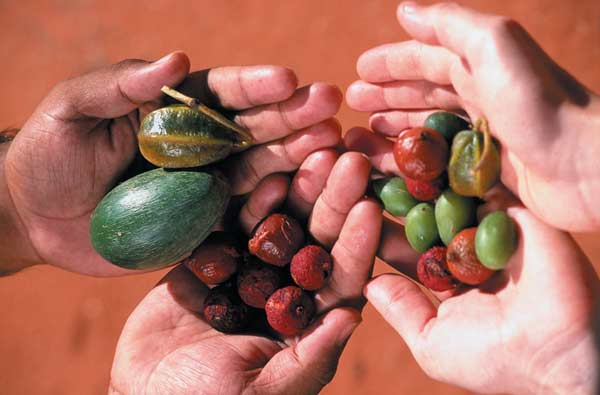
It encompasses plants, fruits, seeds, roots, fungi, insects, and animals. They are all sourced seasonally and sustainably from a specific area of each community. The word "tucker" is Australian slang for food. And the combination carries within it centuries of ingenuity, ecology, and culture.
For travelers asking where to try bush tucker in Australia, the honest answer is almost everywhere, if you know how to look. Authentic experiences range from guided foraging walks through Sydney's Royal Botanic Gardens to remote multi-day journeys through Kakadu National Park.
You can taste native ingredients at First Nations-led dining events in Byron Bay. Join a bush food tour Australia-wide through the Northern Territory's Red Centre. Or sit down to a meal shaped entirely around ingredients that have fed communities since long before any European set foot on this continent.
The key distinction is this: Bush tucker walks experienced in the company of a Traditional Custodian is entirely different from finding a native ingredient listed on a city restaurant menu. Both have their place. Only one will change you.
What Foods Did Aboriginal Australians Eat Traditionally?
For tens of thousands of years, Aboriginal Australians ate what the land offered. They were guided by an encyclopedic knowledge of seasons, ecosystems, and the nutritional and medicinal properties of thousands of native species. Food was never separated from culture, ceremony, or responsibility to the area.
The Protein of the Land
Kangaroo was and remains central to many communities' food traditions. This meat is lean, rich in iron, and deeply flavorful. It was traditionally cooked over open fire or slow steamed in earth ovens.
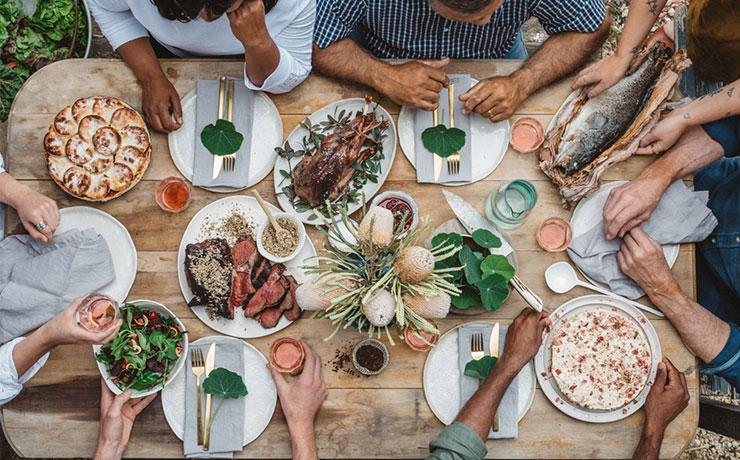
Emu is prized for its meat and its eggs. In coastal and riverine communities, fish, shellfish, mud crabs, and dugong are featured prominently. In Arnhem Land, magpie geese are hunted during the wet season. In arid regions, goanna lizards, echidna, and witchetty grubs provide critical protein and fat during periods when plant food is scarce.
Seeds, Roots, and the Pantry Beneath the Soil
Wattleseed, ground from the pods of acacia trees, is roasted and milled into a flour rich in protein, calcium, and iron. It carries a flavor somewhere between coffee, chocolate, and hazelnut. And it remains one of the most versatile ingredients in contemporary First Nations cooking.

Quandong, a wild peach of the desert, is dried and stored for leaner seasons. Bush tomatoes, tiny and intensely savory, are used as a seasoning the way other cultures use spices. Yams and native tubers are dug from the ground with digging sticks. Their location is held as communal knowledge, passed from elder to child across generations.
The Fruits That Stop You Mid-Bite
Kakadu plum, small and pale, grows across the savanna woodlands of the Northern Territory. It is now recognized as the world's richest known natural source of Vitamin C. It contains up to 100 times more Vitamin C than an orange.

Finger limes, which grow along the subtropical rainforest fringes of Queensland and northern New South Wales, contain tiny pearl-like vesicles that burst with bright, citrus flavor. Lemon myrtle, with its intense lemon-verbena fragrance, is used medicinally and as a seasoning. Davidson plum, deep purple and bracingly tart, make its way into preserves and sauces.
These are not ingredients at the edge of the food world. They are its center, and the rest of the world is only now catching up.
How to Experience Indigenous Australian Cuisine Authentically
The most common question travelers ask when planning this kind of trip is not where to go. It is how to do it right. How to experience Indigenous Australian cuisine authentically means choosing experiences that are led by First Nations people, structured around their knowledge and on their terms, and that return economic and cultural benefit directly to their communities.
An Aboriginal guide is not a tour guide in the conventional sense. They are a knowledge-keeper, a storyteller, a Traditional Custodian of the land they are walking with you. The experience they share is not a recreation or a performance. It is a living expression of culture. That distinction matters. And it should shape how you approach every moment of the experience.
Authentic First Nations culinary experiences in Australia are built around what the community chooses to share and when. You will not always see every ingredient or witness every technique. Some knowledge is sacred and not offered to visitors. This is not a limitation of the experience. It is part of its integrity.
First Nations Culinary Experiences Australia: What to Expect on a Bush Food Tour
A bush tucker walk typically begins before you expect it to. Learning starts the moment you step into the area. Often with a Welcome to Country or a traditional smoking ceremony, in which native plants are burned to cleanse and protect. The smoke is fragrant, eucalyptus-forward, and grounding in a way that is difficult to describe until you have stood inside it.
From there, the walk itself unfolds as a conversation between your guide and the landscape. Plants are identified not just by name but by relationship.

This plant treats inflammation. That one repels insects. This one marks the season when a particular fish runs in the river nearby. The interconnection of everything is the lesson. The food is the vehicle through which it arrives.
Most Aboriginal bush tucker food experiences in Australia include tasting components woven naturally into the walk. You might chew on a leaf your guide has just described. Feel the numbing tingle of a native pepper berry on your tongue. Or bite into some fruit you could not have named an hour earlier.
By the end of the experience, the landscape looks entirely different than it did at the beginning. What appeared empty is now a pantry. What seemed barren is now abundant.
Many experiences conclude with a shared meal that is damper cooked over coals. Billy tea brewed from native herbs is sipped in between bites. You will be amazed at how the seasonal ingredients are prepared simply and intentionally.
These moments around a fire, with the land still visible in every direction, are the ones that travelers remember decades later.
The Bush Tucker Walk Red Centre Australia
If there is one place in Australia where the relationship between food, land, and culture becomes undeniably visible, it is the Red Centre. The bush tucker walk Red Centre Australia offers is not just an experience in a beautiful landscape. It is a lesson in survival, ingenuity, and abundance in a place that looks, to an untrained eye, like it has almost nothing to offer.

The Anangu people, Traditional Custodians of the Uluru-Kata Tjuta region, have lived in this landscape for at least 30,000 years. They know where water hides beneath a dry creek bed. They know which grubs to find inside which tree and at which time of year. They know how to read the color of the sky and the behavior of insects to predict rainfall. And they know which plants, seeds, and animals will sustain life across conditions that would challenge any other food system on Earth.
On guided experiences in the Red Centre, visitors may taste bush plum, native figs, seeds ground fresh into paste, and honey sourced from native stingless bees whose hives are concealed in the hollows of desert trees. The flavor of that honey is unlike anything available anywhere else in the world. It is a taste that belongs entirely and irreducibly to this place.
The landscape during a bush tucker walk in the Red Centre shifts with the light. Early in the morning, the ochre rocks glow pink against a blue sky so clear it feels theatrical. By midday, the heat is absolute and the shadows are sharp. At dusk, the entire desert turns amber and rose. The fire you sit beside to share a meal feels less like a campfire and more like a ritual. In a way, it is.
Best Aboriginal Food Experiences in Australia for Travelers
Australia is a vast country. The best Aboriginal food experiences in Australia for travelers are not concentrated in a single region. They are spread across an entire continent. Each one rooted in a distinct country with its own ecology, its own seasonal rhythms, and its own extraordinary ingredients.
Here is where to find the most meaningful encounters.
Northern Territory and Kakadu
The Northern Territory is the heartland of Aboriginal bush tucker food experience Australia has to offer in its most elemental form. Kakadu National Park, a UNESCO World Heritage site, is one of the most biodiverse regions on the continent. Guided tours here take visitors into the ecosystems of the stone country, the floodplains, and the monsoon rainforests. Each area produces distinct bush foods.

The Kakadu plum grows here in its native habitat. Wild fruits, water plants, and protein sources vary dramatically between the wet and dry seasons. A knowledgeable guide will explain exactly how communities adapted their diet to follow the area's rhythms across six distinct seasons.
Darwin, the territory's capital, serves as a gateway to many of these experiences. It also offers urban Aboriginal food culture through cafes and markets staffed by local First Nations people. This is where bush tomato, native honey, and crocodile appear on menus alongside coffee and conversation.
Queensland and the Daintree Rainforest
The Daintree Rainforest in Far North Queensland is the oldest rainforest on Earth. It is home to food plants and cultural traditions that exist nowhere else. Guided cultural experiences here with Kuku Yalanji knowledge-keepers move through dense canopy to identify edible plants, fruits, and medicines used continuously for thousands of years.

The contrast with the Red Centre could not be more dramatic. Where the desert demands a certain austerity of diet, the rainforest is overwhelming in its generosity. Fruits, leaves, fungi, and roots appear at every turn.
Further south along the coast, the Bundjalung Country around Byron Bay has become a significant destination for those seeking a contemporary First Nations culinary experience. The global recognition of Bundjalung chef Mindy Woods, named a World's 50 Best Restaurants Champion of Change in 2025, has brought international attention to the extraordinary potential of First Nations ingredients when placed in the hands of a chef who has grown up with them.
New South Wales and Byron Bay Country
The hinterland of Byron Bay offers farm based First Nations food experiences where native ingredients are grown, harvested, and prepared in a setting that bridges traditional knowledge and modern sustainability. Foraging walks move through land that has been tended, not just foraged. This reflects an agricultural relationship that predates European farming traditions by thousands of years.
Karkalla, a native succulent that grows in coastal and near-coastal regions, makes an appearance on tables here that is long overdue. Its flavor is salty, slightly lemony, and deeply of the sea and the soil simultaneously.
For cultural food experiences and Australian travel that connect urban visitors with the land, Sydney's Royal Botanic Garden offers Aboriginal Heritage Tours that move through the garden's First Nations plant collection with a guide who brings each species alive through story. The bush tucker hamper experience along the harbor foreshore, with views of the Opera House and Harbour Bridge, offers an accessible entry point for those building a broader Australia itinerary.
Western Australia and Perth Region
Just outside Perth, guided bush food experiences led by Wardandi Bibbulmun knowledge-keepers introduce visitors to the wild foods of the southwest. Quandong, native limes, sandalwood nuts, coastal greens, and the aromatic herbs and spices of the Noongar Country.
These tours are organized around the six Noongar seasons. Each one brings different foods to the experience. This means the experience changes substantially depending on when you visit. This is by design.
Seasonal eating is not a lifestyle choice in this context. It is the fundamental principle of a food system that has sustained communities through climatic extremes for tens of thousands of years.
Tasmania and Palawa Country
Tasmania's Aboriginal food tradition centers on the Palawa people. They maintained sophisticated food cultures across the island's diverse ecosystems before European contact disrupted them profoundly.
Today, cultural revival efforts are restoring traditional knowledge. Guided experiences near Hobart on Piyura Kitina, Risdon Cove, allow visitors to taste pepperberry, warrigal greens, marinated wallaby, and strawberry gum in the landscape where these foods belong.
Pepperberry in particular, a Tasmanian native with an intense, building heat followed by a floral sweetness, is one of the most distinctive flavors in any First Nations culinary experience Australia offers.
The Authentic Aboriginal Dining Experience: Where Food Meets Ceremony
There is a category of Aboriginal bush tucker food experience in Australia that goes beyond the walk and the afternoon tasting. It is an immersive dining experience. When a full meal becomes the architecture for a longer cultural encounter. And where every course carries a story that the food alone cannot tell.
Dining Under the Southern Sky
Some of the most extraordinary authentic Aboriginal dining experiences in Australia take place outdoors, at night. They are under skies so unpolluted by artificial light that the Milky Way is not a faint smear but a structure you can read.
The landscape as a dining room is not a gimmick in these settings. It is the entire point. The sounds, the air, the stars, and the fire are all part of the meal. Between courses, there may be music. Traditional instruments whose resonance carries across open country in a way that feels ancient because it is. Storytelling anchors the evening, connecting the food on the plate to the country it came from and the people who have always known it.
Cultural Food Experiences and Australian Travel: How to Plan This Right
Weaving an Aboriginal bush tucker food experience in Australia into a broader travel itinerary is not complicated. But it does require intentionality. These are not experiences you book the day before by sliding it into a half-morning and move on from it by lunch. They deserve time, space, and ideally placement at a point in your itinerary when you are not yet tired and not yet rushing toward departure.
Timing Your Visit Around the Land
The best time to travel to the Northern Territory for bush tucker experiences is during the dry season. That season runs from approximately May through October. Temperatures are manageable, the roads are passable, and many guided experiences that close during the wet season are open and operating.
In Queensland's rainforest regions, the cooler months of June through August offer comfortable walking conditions. Western Australia's southwest is most lush and diverse in its food plants during the spring months of September and October. This is when the Noongar Djilba and Kambarang seasons bring flowering and an abundance of food.
Who This Experience Is For
Cultural food experiences and Australian travel of this kind suit almost every traveler profile. But they are particularly transformative for certain types of journeys. Families with older teenagers and adult children find that bush tucker experiences open conversations about history, ecology, and belonging that continue long after the trip ends.
Multigenerational groups, spanning grandparents to grandchildren, respond to the storytelling dimension in ways that cross age gaps effortlessly. Everyone is equally a beginner in this landscape. This levels the group in a way that family travel rarely achieves.
Empty nesters looking to move deeper into destinations rather than checking off a list find that a First Nations culinary journey anchors an Australia trip with meaning that traditional sightseeing rarely delivers.
Solo female travelers often describe Aboriginal-guided experiences as among the most genuinely safe and deeply welcoming of any travel they have undertaken anywhere in the world.
What to Bring, How to Show Up
Wear comfortable, closed-toe shoes and clothing appropriate for the season and region. Carry water. Leave behind any expectation of a fixed itinerary, because the best guides read the land and the day rather than following a script.
Arrive curious and quiet enough to listen. Ask questions. Accept what is offered with both hands, which in many Aboriginal communities is a gesture of genuine respect. And bring nothing but your attention, because that is all that is asked of you, and it is more than enough.
How to Choose an Ethical and Authentic Operator
The question of how to experience Indigenous Australian cuisine authentically is inseparable from the question of who is leading the experience.
Look for operators that are Aboriginal-owned or Aboriginal-led. This way the financial benefit returns to the community and the knowledge being shared belongs to the people sharing it.
Look for guides who are Traditional Custodians of the specific country you are visiting, not generalist guides trained to deliver a script about Aboriginal culture at large. Ask whether the experience has been developed in consultation with and led by community elders.
Look for recognition from bodies such as Discover Aboriginal Experiences, Tourism Australia's collective of verified and authentic First Nations operators, which maintains a network of more than 200 vetted experiences across the country.
Avoid experiences where Aboriginal culture is decoration rather than the center of the encounter. A restaurant that uses bush ingredients without any connection to or benefit for First Nations communities is very different from an experience designed, led, and owned by the people whose knowledge makes it possible.
Honestly, working with an experienced travel advisor like me is one of the best ways to ensure you experience an authentic Aboriginal bush tucker walk in Australia during your vacation.
This Is the Food Story Australia Has Been Waiting to Tell You
There is a particular kind of travel that rearranges something inside you, quietly and permanently. You do not notice it happening in the moment. You notice it months later, when you reach for a particular flavor and realize you are thinking of a fire in the Red Centre. Or a leaf your guide pressed into your palm on a rainforest walk. Or the way the smell of smoking eucalyptus stayed in your hair for the rest of the day.
That is what the Aboriginal bush tucker food experience Australia offers does to you. It does not just add a memory. It rewires the way you understand nourishment, belonging, and what it means to eat something that has earned its place on your plate over sixty-five thousand years.
This is not a culinary tourism box to check. It is not a day trip between the big-ticket landmarks. It is the landmark. It is the experience that, years from now, when someone asks you about Australia, you will not start with the Opera House or the Great Barrier Reef. You will start here, with a food you learned about, a flavor you tasted for the first time in your life, and a story someone trusted you enough to tell.
I know where to find these experiences. I know which operators are the real thing, which regions are worth building an itinerary around, and how to place this kind of encounter exactly where it will hit hardest during your trip. There is nothing left for you to research, second-guess, or worry about. All you have to do is say yes.
When you are ready, reach out. Everything else is already handled.
Sign up for my newsletter as well, so you don’t miss any of the exciting travel information I share throughout the year.


