Agritourism in Australia: Farm Stays, Harvest Days and Paddock-to-Plate Travel

The grapes are cold. That is what surprises you first, at five in the morning in the Barossa Valley in February, when you wrap your hand around a bunch of shiraz and feel the whole night still held inside the fruit. This is agritourism in Australia at its most incredible moment: Snips in one hand, a bucket at your feet, and a winemaker two rows over reading the sky the same way her grandfather did.
Back home, your neighbors are scraping frost off their windshields. Here, the light is drawing a pink line along the ridge. Magpies are warbling from the gum trees. And the only deadline is getting the fruit in before the heat arrives. By lunch you will be seated at a long table between the vines, eating food that grew within sight of your chair.
Farm stays, harvest days and paddock-to-plate meals are three different ways to experience your time in Australia. Here is how to plan each one, when to go, and what it takes to make the whole journey feel effortless.
Agritourism in Australia: Farm Stays, Harvest Days and Paddock-to-Plate Travel
What Agritourism in Australia Means for Travelers
Agritourism in Australia means traveling to the places where the country's food, wine and wool are produced. As well as stepping into that work as a welcomed guest. It can look like a night in a farmhouse, a morning in a shearing shed, a tasting at a farm gate, or a meal made from what was harvested a few hours earlier.

Picture a kitchen bench worn smooth by decades of elbows. Your host pours tea from a pot that has seen more droughts than you have birthdays, then points through the window. Canola on the left hill. Merino ewes on the right. A creek her family has watched rise and fall for four generations. You are not watching a demonstration staged for visitors. You are sitting inside a working life, and you have been invited to stay a while.
Why Farm Families Are Opening Their Gates
Much of agritourism in Australia grew from necessity, not marketing. When the wool industry collapsed, some families turned old shearers' quarters into guest rooms simply to keep the farm viable. In the outback, station owners who weathered drought after drought found that hosting travelers steadied their income enough to keep grazing sustainably, through the good years and the lean ones.
That history changes what your visit means. The family who hands you a mug of billy tea at dusk is not running a hotel with a farm theme. They are farmers who have chosen to share their land so they can keep it. Every night you spend there, and every jar of honey or bottle of wine you take home from their shed, feeds directly into that choice.
Sleep, Harvest, Eat: One Trip, Three Ways In
Most guides treat farm stays, harvest experiences and paddock-to-plate dining as separate trips. The journey comes alive when you combine all three into a single day.
You wake in a farmhouse to the low bleating of ewes and the smell of eucalyptus after overnight rain. After breakfast, your host hands you a basket and walks you to the orchard, the olive grove, or the rows of vines heavy with fruit. You pick until your shoulders warm in the sun. Then you carry that harvest to the kitchen, where it becomes part of a lunch you will still be describing to friends months later.
That loop of sleeping, harvesting and eating is what turns a pleasant country weekend into something that stays with you.
Australian Farm Stays and How to Choose One
Browse farm stay Australia listings for ten minutes and you will see everything from a tin-roofed cottage beside a dairy to a sandstone homestead with a chef in the kitchen. The photos all look lovely. What separates a good match from a disappointing one is how the stay fits the way you want to spend your days, and how much of the farm you want to touch.
Some Australian farm stays will hand you a cheese board and leave you to the quiet. Others will have you in borrowed boots before the sun is up, helping move a mob of sheep while the dogs do most of the work.

Neither is better. What matters is which one will make you happiest. That is where every planning conversation with me begins, usually with a simple question: How do you picture your mornings?
Your First Morning on a Working Farm
Your first farm morning usually starts before your alarm. A kookaburra opens with its rolling laugh and a rooster answers. Somewhere beyond the window a quad bike coughs into life as your host heads out to check the water troughs.

This is the working farm stay Australia does best: Real chores happening around you, with an open invitation to join in. You might scatter grain for the chooks and collect warm eggs for breakfast. You might bottle-feed an orphaned lamb, help shift a mob of cattle to fresh grass, or ride along on the morning feed run with a thermos balanced on your knees.
Nothing is required. Some guests spend the whole stay in a deck chair with a book, watching the light move across the hills. Others tag along for every task and leave knowing how to take care of the farm. Both are right. A good host knows which guest you are by the second cup of coffee.
Farm Stay, Station Stay or Vineyard Stay: How They Differ
These three terms get used interchangeably, but they describe very different experiences.
A farm stay sits on a working property of manageable scale. It is usually within a few hours' drive of a city. Expect animals, gardens, country cooking and hands-on activities.
A station stay is set on a vast pastoral property in the outback, some covering areas larger than small countries, running sheep or cattle. Expect remoteness, red earth, star-filled skies and a glimpse of how families live hours from the nearest town.
A vineyard stay places you among the vines in a wine region such as the Barossa, the Hunter Valley or Margaret River. Expect cellar doors, harvest activity in late summer, and food prepared around the wine.
The right choice depends on how you like to travel. Couples chasing quiet often love a vineyard stay. Families tend to thrive on a farm stay. Travelers who want the deepest sense of Australia's scale should give a station stay a serious thought.
The Luxury Farm Stay Australia Does So Well
Comfort and authenticity are not opposites here. A luxury farm stay Australia hosts create might mean a freestanding bath facing a valley where morning fog pools, a fireplace already laid when you return from a walk, and a dinner menu written that afternoon around what came out of the kitchen garden.
The farm is still working just beyond the glass. You can watch the shearers arrive from a linen-dressed bed, then wander down after breakfast to see the fleece fly. Some properties pair biodynamic vineyards with private tastings. Others raise their own wagyu or lamb and serve it at a long communal table under strings of lights.
What makes these stays special is that the luxury comes from the land itself rather than from gold taps. The softest moment of the trip might be a glass of local wine on the veranda as kangaroos come out to graze at dusk.
The Outback Station Stay, Australia at Its Widest
Drive through the front gate of an outback station and you may not reach the homestead for another half hour. Stations are pastoral properties measured in hundreds of square miles rather than acres. In Western Australia alone they cover more than three times the area of the United Kingdom.

An outback station stay is where the dry crack of the heat meets red dust underfoot, and where the night sky becomes the main event. Many station families have worked the same land for generations. They host guests in everything from restored shearers' quarters to grand stone homesteads with wide verandas. Some sit beside the ocean, where cattle country runs straight down to empty beaches. Others lie close to famous landscapes such as the Flinders Ranges in South Australia or Kings Canyon in the Northern Territory.
Days on a Sheep Station Stay
Step into a working shearing shed and the first thing that reaches you is the smell: Warm lanolin, dust and sun-baked timber. Then comes the sound. The steady buzz of handpieces and the soft thud of fleece landing on the wool table.

A sheep station stay gives you a front-row seat to the rhythm that built much of rural Australia. In South Australia, sheep and cattle stations have anchored outback life for more than 150 years. You might ride out at dawn to check waters with your host, learn to judge a fine merino fleece by feel, or sit on the rail of the yards as working dogs move a mob with a few whistled commands.
Evenings slow down. Dinner is often lamb from the property, cooked over coals. It is followed by a walk past the hum of the generator to where the Southern Cross hangs low over the paddocks.
Days on a Cattle Station Stay
A cattle station stay runs on a bigger, wilder clock. Mustering can mean horseback, motorbikes, 4WDs or even helicopters sweeping across land so large the herd may be hours from the yards. Guests watch from a safe vantage point or ride along, dust lifting gold behind the cattle as the sun climbs.

Timing matters more here than almost anywhere else in Australia. In the tropical north, across the Kimberley and the Top End, many stations welcome visitors only during the dry season, roughly March to October. Once the wet season arrives, rivers rise, dirt roads close and some properties become reachable only by air.
That rhythm is part of the appeal. A dry-season visit brings warm days, cool nights, and waterholes your hosts know are safe for swimming. Plus, a chance to see how families manage land on a scale few travelers ever imagine. Ask about the history written into the land, too. Some stations hold Aboriginal rock art sites far older than any homestead.
Harvest Days: Joining the Harvest as a Guest
Harvest is when a farm is most alive. Trucks run late, kitchens smell of jam and crushed fruit, and everyone moves with purpose. Stepping into that energy as a guest is one of the richest experiences rural Australia offers a visitor.

A Harvest Holiday Is Not a Harvest Job
Search for grape or fruit picking in Australia and much of what appears is aimed at backpackers looking for seasonal work. That content can leave international travelers wondering whether they are even allowed to join in.
Here is my answer. Paid harvest work requires a visa with work rights, such as the working holiday visa many young travelers use. The standard visitor visas and electronic travel authority that most American vacationers travel on do not allow paid work. What you can do as a tourist is book a hosted harvest experience: A guided morning in the vines or orchard, designed for guests, usually paired with tastings, a meal or a winemaking lesson.
The difference shows in the details. A picking job means long days, piece rates and sore backs for weeks. A guest experience means a few unhurried hours, a host who explains every step, and a long lunch as your reward. You get the soil on your hands without the shift roster.
The Grape Picking Experience Australia Saves for Vintage Season
Vintage is what Australians call the grape harvest. It runs roughly from January through March across the southern wine regions, with the Hunter Valley in New South Wales often starting first.

A grape picking experience Australia wineries offer during vintage tends to begin early, while the fruit is still cool. In the Barossa, guests learn how winemakers judge ripeness by tasting for flavor, sugar and acidity before deciding which rows to pick. In Western Australia's Swan Valley, picking events run from late January into March. Some picking events start at sunrise as the light spills gold across the vines.
Then comes the part everyone talks about afterward. You climb barefoot into a tub of freshly picked grapes and stomp, the skins cool and slippery, the juice rising purple around your ankles, everyone laughing at the sound it makes.
A full vintage experience often ends at a long table among the vines, with wine from earlier years, food from local growers, and the satisfying ache of a morning spent outdoors. Nothing explains a glass of wine quite like having picked its fruit.
Pick Your Own Fruit Australia Style
Australia's farm gate culture means you rarely need a reservation to fill a basket. Hand-painted signs along country roads point to orchards and berry patches where you wander the rows yourself, then settle up at a shed that may run on an honesty box.

With climates ranging from tropical to cool and wet, something is ripening somewhere almost every week of the year, from mangoes in the north to berries in Tasmania. The seasonal calendar below maps what to look for and when.
A few things I recommend doing to make the experience better. Check the farm's social media the morning you plan to go, because picking days depend on how much fruit ripened overnight. Arrive early, before the best rows are picked over and before the heat settles in. And taste as you go. Most growers expect it.
Picture a five-year-old in a sun hat, chin stained red with cherry juice, holding up a single perfect fruit as if it were treasure. These small moments are often the ones families bring up years later.
A Seasonal Calendar for Agritourism in Australia
Timing decides almost everything about a farm trip. Arrive a week early and the cherries are hard and green. Arrive in the wet season and the station road is underwater. Matching your dates to the rhythm of the land is the single most valuable planning step you can take.

Why Australia's Harvest Falls in Your Winter
Australia sits in the Southern Hemisphere, so its seasons run opposite to North America's. When snow is piling against your back door in January, Australian growers are racing the summer sun to bring their crops in.
That reversal is a gift for American travelers. A February trip trades parkas for sun hats and drops you into wine country in the thick of harvest. This is when cellar doors hum and every winemaker you meet has purple-stained hands. Even the holidays flip: Christmas lands in high summer, celebrated with seafood, cold drinks and long afternoons outdoors.
Keep Australian school holidays in mind, too. The long summer break, from mid December to late January, fills country properties with local families. The shoulder months on either side often bring the same harvest bounty with more room at the table.
Best Time for Harvest Season Australia, Month by Month
The best time for traveling during harvest season in Australia depends on what you want to taste. Use this calendar as a starting point, then let a travel advisor like me fine-tune it, since weather can shift any harvest by a few weeks.
Summer (December to February)
Cherries peak in the weeks around Christmas in New South Wales, Tasmania and the Adelaide Hills. Lychees ripen in tropical Queensland, and stone fruit orchards across the south smell of sugar and warm leaves. Evenings stretch long, with cicadas humming at dusk.
Autumn (March to May)
This is the harvest's crescendo. Vintage reaches its peak in the cooler wine regions. Olive groves on South Australia's Fleurieu Peninsula are harvested in March and April. Apple and pear orchards in Victoria and Tasmania's Huon Valley run from February into May. Mushroom foraging walks appear in Victoria and New South Wales. By late April the vineyards blaze red and gold.
Winter (June to August)
Truffle season opens in June, centered on the Manjimup region of Western Australia, where trained dogs nose through frosty oak plantations at first light. Citrus groves glow in inland New South Wales, macadamias drop in the subtropical north, and wood smoke drifts from farmhouse chimneys at night. Up north, the dry season makes this a prime window for station stays.
Spring (September to November)
Paddocks turn green and lambs wobble beside their mothers across the southern states. Asparagus spears push up in Victoria. Strawberries reach their sweetest in southeast Queensland. Western Australia's wildflower season spreads color through farm country. It is a gentle, fresh time to visit before the summer heat arrives.
Paddock to Plate Experiences Australia Serves Best
There is a moment at a farm table when someone tells you where your dinner came from, and you can see the place from your seat. That moment is the heart of paddock-to-plate travel, and each Australian region delivers it in its own way.

What Paddock to Plate Means
Paddock to plate means eating food at, or very close to, the place where it was grown or raised, with the farmer's story attached. In Australia, a paddock is simply a fenced field, so the phrase traces the full journey from pasture to fork.
In practice, you might walk the property with your host before dinner, watching lambs graze on clover. You will then sit down to a meal where the vegetables were pulled that afternoon and the bread was baked with grain from down the road. The chef might be the farmer's daughter. The butter might come from the dairy next door.
What sets this apart from ordinary restaurant dining is the connection. You taste the season, the soil and the care that went into it. You understand why it tastes that way. For travelers who value sustainability, it also means shorter supply chains and more of what you spend staying with the growers themselves.
Farm to Table Dining Australia, Region by Region
Every region brings its own character to farm to table dining Australia wide. It is shaped by climate, soil and the people who settled there.
The Hunter Valley pairs crisp semillon with produce from surrounding farms. Long lunches stretch into golden hour as the vineyards go hushed and still.
The Barossa carries the imprint of its 19th century German-speaking settlers. Smoked meats, rye bread and preserved fruits are served alongside generous reds.
The Southern Highlands of New South Wales offer cool mornings, heritage apple varieties and ethically raised meat. It is a short drive from Sydney.
Margaret River delivers marron, a sweet freshwater crayfish, and grass-fed beef against salt air from the Indian Ocean.
Tasmania may be the most concentrated food island in the country, with oysters, cheese, cider and cool-climate wine all within easy reach of one another. Plus, steady rain keeps the pastures a startling green.
Choosing a region is less about finding the best food and more about deciding which flavors you want to come home craving.
Indigenous Bush Food Experiences Australia Offers
Long before any fence was built, First Nations peoples were caring for this land and its foods. It is a relationship that reaches back more than 60,000 years. The Indigenous bush food experiences Australia offers today invite you to learn from that knowledge directly, guided by Aboriginal and Torres Strait Islander hosts.

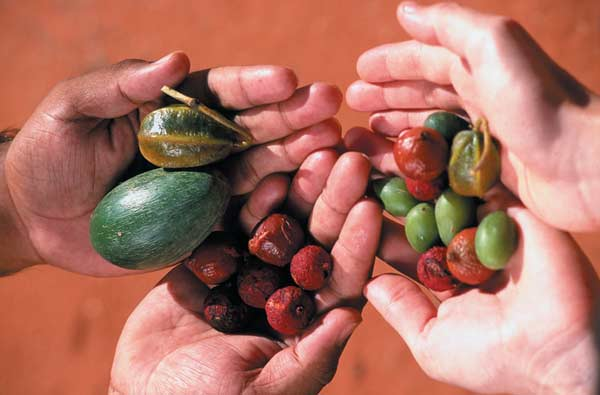
Picture your guide stopping beside a shrub, crushing a leaf between her fingers and holding it out to you. Lemon myrtle. The citrus scent is so bright it seems impossible. Further along, she splits open a finger lime and shows you the tiny pearls inside that pop on your tongue. Later, you might taste damper made with roasted wattleseed, nutty and close to coffee, or the tart punch of a Davidson plum.
Approach these experiences as a guest in someone's culture. Choose tours that are Aboriginal owned or led, listen more than you ask, follow your host's guidance on photographs and sacred places, and accept that some stories are not yours to retell. Done with respect, it is one of the most meaningful ways to understand what this continent has always provided.
Planning Agritourism in Australia From Overseas
Australia rewards travelers who plan around its distances and seasons. It quietly tests those who do not. The difference between a farm trip that flows and one that feels like a string of long drives usually comes down to decisions made months before departure.
Fitting Farm Time Into a Larger Australia Itinerary
Australia is roughly the size of the continental United States, so the first rule is simple: Do not try to see it all. Most travelers experience agritourism in Australia as one chapter of a longer journey, paired with a city, the coast or the Great Barrier Reef.

A ten-day trip built around food and farms might flow like this. Two nights in Sydney to recover from the long flight. Two nights at a vineyard stay in the Hunter Valley, a short drive north. A domestic flight to Adelaide, then three nights in the Barossa with a morning in the vines and an afternoon at a farm gate. Finally, two nights at a sheep station in the Flinders Ranges, where the silence alone is worth the drive, before connecting home through Sydney.
The pacing matters as much as the places. I build in at least two nights wherever possible, because a farm reveals itself at dawn and dusk. A single night rarely catches both. Domestic flights do the heavy lifting between regions, leaving road time for the scenic stretches.
The Details I Sort Out Before You Land
Rural Australia is wonderfully remote, and remoteness comes with details that city-focused guides never mention. These are the ones I handle for every client.
Many rental car agreements exclude unsealed roads, which can quietly void your coverage on the gravel track to a farmhouse. I check every route against the vehicle and arrange 4WDs or transfers where needed. Kangaroos are most active at dawn and dusk, so I time drives to arrive in daylight.
Biosecurity is taken seriously here. Australia screens closely at the border for food, plant material and soil. Many farms ask guests to arrive in clean footwear or use a boot wash at the gate to protect their animals and crops.
A lovely farm stay can turn stressful when nobody mentions that the last stretch is gravel or that check-in closes at five. Those are exactly the details that should never become your problem.
What to Pack for a Farm or Station Stay
Picture yourself at the paddock gate at sunrise, breath fogging in the cold air, knowing that by noon you will want shade. Pack for both.
Sturdy closed-toe boots or shoes you do not mind muddying
Layers, since outback nights can drop sharply after hot days
A wide-brimmed hat and high-SPF sunscreen for long hours outdoors
Insect repellent for dusk around dams and creeks
A headlamp for walks between cottage and homestead after dark
A refillable water bottle
Clothes you will not miss if red dust claims them
Agritourism in Australia: Your Questions Answered
How far ahead should I book a farm or station stay?
Six to twelve months ahead is wise for vintage season, Easter and the Australian summer holidays. I recommend even earlier for small properties with only a cottage or two. Popular northern stations book up early for the dry season as well. For quieter months, three to six months is standard since there are still good options available.
Is a farm safe for young children?
Yes, when the family follows the host's lead. Good hosts set clear rules on arrival and supervise animal activities. Expect children to be kept well away from working machinery, quad bikes, dams and livestock yards unless an adult is with them. If you are traveling with toddlers, ask in advance whether the cottage yard is fenced and whether any pools or water tanks are secured.
Can I visit farms on day trips instead of staying overnight?
Yes. Several wine and farm regions sit within an easy drive of major cities, including the Yarra Valley near Melbourne, the Adelaide Hills near Adelaide and the Swan Valley near Perth. Cellar doors, cheese makers, farm gate shops and berry farms welcome day visitors. A guided food trail can link several producers in one afternoon. An overnight stay adds what a day trip cannot: Dinner with your hosts and a night far from city lights.
Are farm stays suitable for travelers with limited mobility?
Many are, but it varies widely by property. Uneven paddocks, gravel paths, steps up to old verandas and high farm vehicles can all be challenging. Some newer cottages are built with step-free access and accessible bathrooms. Some hosts offer vehicle-based tours in place of walking ones. I ask hosts specific questions, such as door widths, shower access and the distance between buildings, rather than relying on a listing's description.
Can I bring farm produce or wine home to the US?
Wine, yes, within limits. US Customs allows travelers to bring alcohol for personal use, with duty and state rules applying beyond a small allowance. Fresh fruit, vegetables, meat and many other farm products are generally not permitted. Declare every food and agricultural item on your customs form, even shelf-stable ones, and let the officers decide. These rules change on occasion, so it is best to check out the current guidelines before you enter a farm shop full of temptation.
A Seat at the Farmhouse Table
Something shifts after you have pulled a carrot from cold soil, watched a fleece fall away from the shears in one piece, or tasted a wine made from grapes you picked yourself. Food stops being something that arrives wrapped in plastic. It becomes a place, a season and a family you can name.
That is the quiet gift of agritourism in Australia. You come for the vineyards, the red earth and the open skies. You leave with a different relationship to your own kitchen table, and a standing invitation from people who were strangers a week before.
If a morning spent among vines, or an afternoon on a working farm, sounds like your kind of adventure, I would love to help you plan it.
My newsletter offers even more insights into travel destinations, current travel information and so much more. Sign up today.